Reflecting on GBFB’s Advocacy Work in 2025

This was an unprecedented year for the anti-hunger movement and The Greater Boston Food Bank’s (GBFB) advocacy efforts.
Over the course of 2025, federal food assistance programs were under unrelenting assault. Within months of taking office, the new Trump administration’s Department of Government Efficiency (DOGE) slashed USDA funding, cutting The Emergency Food Assistance Program (TEFAP) grants for Massachusetts by $4 million. This was followed by the devastating enactment of H.R1—the One Big Beautiful Bill Act in July. This new federal law will significantly reduce food assistance benefits and health care access. Up to 160,000 Massachusetts residents are at risk of losing SNAP benefits, and this will result in greater need at our local food pantries.
Then, in November, for the first time in the history of the SNAP program, benefit recipients did not receive funds for nearly two weeks due to the federal government shutdown. Community food providers across GBFB’s service area reported an influx of families struggling to put food on their tables. Many people shared that this was the first time they had ever utilized the emergency food system, or that they had not been to a pantry since the COVID-19 pandemic. In parts of the state, the number of families visiting a given pantry tripled.
In response to these federal attacks, we fortified our advocacy efforts.
GBFB and the Food Bank Coalition of Massachusetts secured a 20 percent increase to the Massachusetts Emergency Food Assistance Program (MEFAP) in the FY26 (October 2025 – September 2026) state budget. The record $50.5 million supported robust food purchasing and distribution this year as pantries across Massachusetts faced growing need.
The Healey-Driscoll Administration established the Governor’s Anti-Hunger Task Force, bringing together leaders in hunger advocacy from across Massachusetts. GBFB has been honored to serve on this task force for the last six months.
Through it all, GBFB—in collaboration with our incredible Agency Partners, coalition members, and advocates—expanded our outreach and impact. Below is an overview of the work GBFB undertook in 2025:
January
- The GBFB advocacy team launched the MEFAP Advocacy Plan, outlining a year-long action plan to engage with elected officials across Eastern Massachusetts to increase state food assistance funds, work with our volunteer advocates to craft testimony, and raise awareness about the impact of MEFAP.
- With the new Administration in the White House, GBFB remained in close contact with our federal Congressional delegation, communicating the importance of TEFAP, SNAP, and all federal food assistance programs.
- We worked with our state coalition partners in the Make Hunger History and Food Bank Coalitions to prepare for the state budget cycle and advocate for increased MEFAP funding.
March

- The Hunger Free Campus Coalition, led by GBFB, convened students, advocates, and legislators at the Massachusetts State House for a day of action supporting the Hunger Free Campus Initiative. This program funds community colleges and state universities in their work to combat college hunger.
April
- GBFB spoke at the governor’s budget hearing in early April, advocating for $55.5 million in MEFAP funding to support community food assistance partners and bolster the Massachusetts agricultural economy.
- Recognizing the 30th anniversary of MEFAP, we hosted an Anniversary Celebration and Advocacy Day. Leaders from across the state gathered to honor the milestone and local farmers and fishermen shared the powerful economic impact of this state grant.
May
- GBFB provided testimony in support of An Act Establishing the Hunger Free Campus Initiative. GBFB advocates shared the realities of hunger on college campuses and the work done by students at pantries and mobile markets.
June
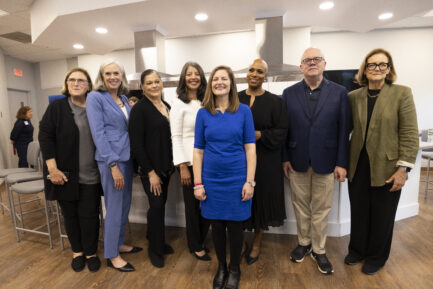
- In collaboration with Mass General Brigham, GBFB released its fifth annual statewide food access report, “Food Access in Massachusetts: The Cost of Hunger.” The report found that 1 in 3 of our neighbors across the state face food insecurity, and these rates are even higher among people of color, seniors, and LGBTQ+ people. Massachusetts congressional leaders spoke passionately at the event about federal policy solutions to advance food security and the importance of the report’s findings.
July
- GBFB President and CEO Catherine D’Amato was invited to serve on the Governor’s Anti-Hunger Task Force, convened in response to harmful federal policy changes.
- GBFB and our food bank partners received record MEFAP funding for FY26 at $50.5 million, allowing us to support our community food assistance partners through increased food distribution.
- In the wake of a significant loss of funding for food from the USDA, GBFB announced the Strength in Unity Challenge to match every new and increased gift between June 17 and December 31, 2025.
September
- GBFB advocates participated in Hunger Action Day on September 9 to launch Hunger Action Month. Throughout September, GBFB leaders provided testimony for hunger relief legislation, hosted virtual advocacy trainings, and raised awareness at events across the state.
October
- In response to the SNAP freeze and the government shutdown, GBFB acted quickly. In addition to providing more food to our Agency Partners, we:
- Advocated for SNAP reinstatement at the state and federal level.
- Worked with the Healey-Driscoll Administration to advance a monthly payment for MEFAP.
- Joined a rally organized by the Make Hunger History Coalition at the Massachusetts State House steps to urge the government to act to protect MA families.
- Urged action to protect SNAP benefits, sending letters to the Massachusetts Congressional Delegation, the Healey-Driscoll Administration, and State Legislature.
November
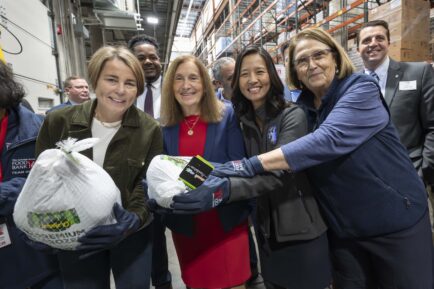
- The Hunger Free Campus Coalition hosted another advocacy day, featuring student panelists and state legislature hunger-relief champions.
- GBFB hosted our annual Chain of Giving event, where Governor Healey and Mayor Wu spoke about the importance of food assistance support and kicked off the holiday season.
Looking Ahead
This year’s advocacy reflects the critical importance of the emergency food system. In the face of historic cuts to hunger-relief programs, GBFB continues to support our neighbors across our state and the country.
In 2026, we will continue to advocate for strong financial and administrative support for public programs that support the health and security of everyone in the Commonwealth.
For up-to-date information about our advocacy work, sign up for GBFB’s advocacy email list here.
